
Email marketing hasn’t died—but the way it works has fundamentally changed.
In 2026, success in cold outreach is no longer about sending more emails. It’s about building a system that earns trust from inbox providers before your message is even opened. And at the center of that system lies one critical component most businesses overlook:
Your cold email SMTP relay.
If your outreach isn’t converting, there’s a high chance your SMTP infrastructure—not your copy—is the real problem.
This guide will walk you through:
- Why cold emails fail today
- What role a cold email SMTP relay plays
- How to fix your system for consistent lead generation
📉 The Harsh Reality: Cold Email Has Changed
A few years ago, you could:
- Buy a list
- Connect a basic SMTP
- Send 10,000 emails
- Get leads
Today, that same approach will:
- Kill your domain reputation
- Land you in spam
- Get you blocked entirely
Why?
Because inbox providers like enterprise-grade filters now evaluate:
- Sender reputation
- Sending patterns
- Engagement behavior
- Infrastructure quality
Before your email is even delivered.
❌ Why Most Cold Email Campaigns Fail
1. Poor SMTP Infrastructure
Most people use:
- Cheap shared SMTP servers
- Misconfigured sending tools
- Overloaded IPs
This is the fastest way to destroy deliverability.
A cold email SMTP relay should:
- Provide clean, reputation-controlled IPs
- Allow gradual scaling
- Support authentication protocols
Without this, your campaigns are dead on arrival.
2. No Domain Warm-Up Strategy
You cannot just:
- Buy a domain
- Start sending 500 emails/day
That’s a red flag.
Inbox systems expect:
- Natural email behavior
- Gradual volume increase
- Reply-based interactions
Without proper warm-up:
➡️ Your SMTP relay gets flagged
➡️ Your domain loses trust
➡️ Your emails go to spam
3. Sending Behavior Looks Artificial
Automation tools often:
- Send too fast
- Send identical emails
- Ignore engagement signals
This creates patterns that filters detect instantly.
A proper cold email SMTP relay setup should simulate:
- Human sending intervals
- Reply chains
- Natural engagement
4. Weak Authentication Setup
If your DNS is not configured correctly, nothing else matters.
You need:
- SPF
- DKIM
- DMARC
These act as your identity proof.
Without them:
➡️ Your SMTP relay is not trusted
➡️ Emails may not even reach inbox servers
🧠 Understanding Cold Email SMTP Relay (The Right Way)
Let’s simplify it.
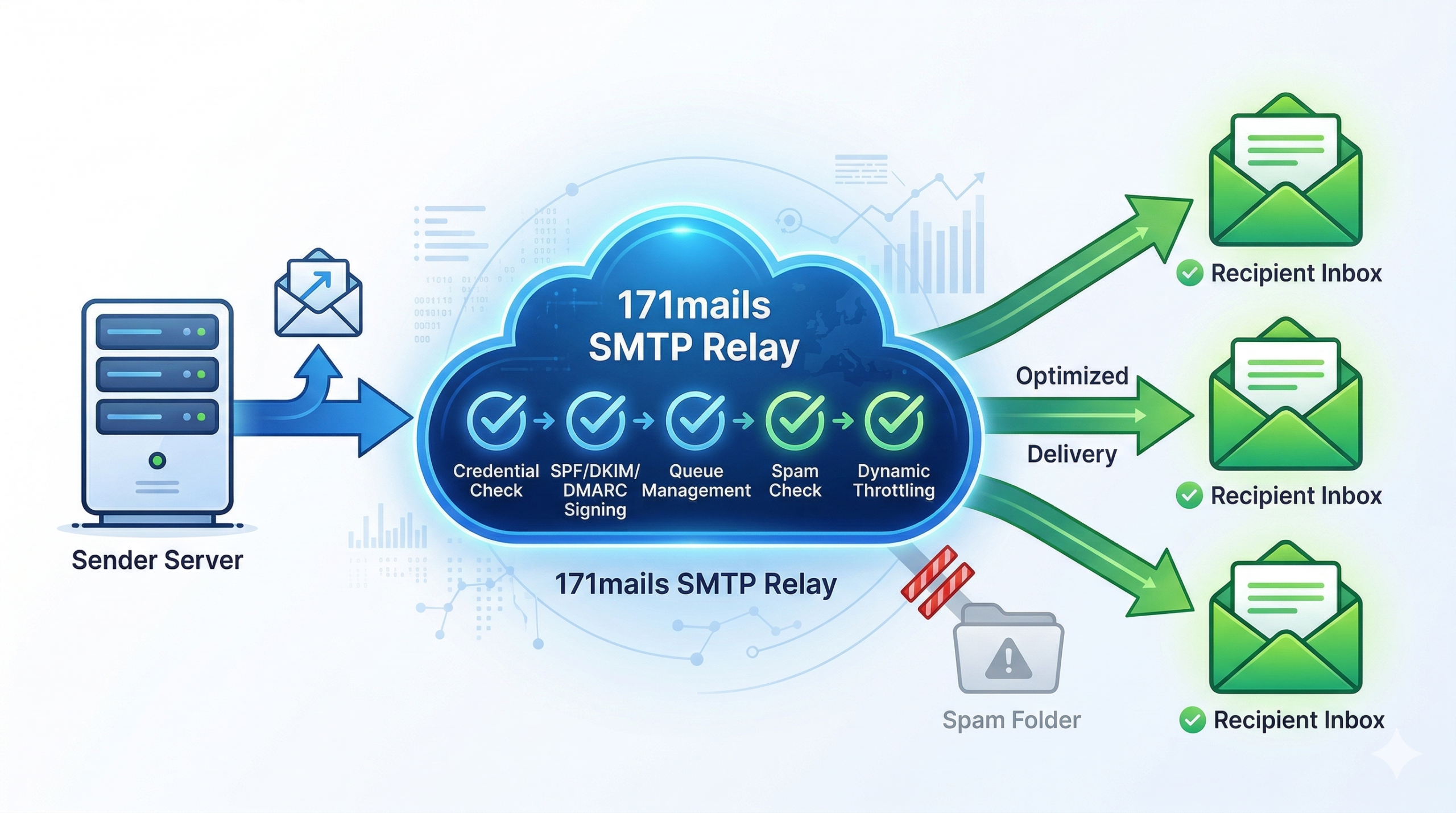
A cold email SMTP relay is the system that:
- Sends your emails
- Manages your IP reputation
- Communicates with receiving servers
But not all SMTP relays are equal.
🔑 Key Features of a High-Quality Cold Email SMTP Relay
1. Dedicated or Clean IP Pools
- Avoid shared abuse
- Maintain consistent reputation
2. Throttling & Sending Control
- Control emails per hour/day
- Avoid spam triggers
3. Feedback Loop Handling
- Detect complaints
- Adjust sending automatically
4. Bounce Management
- Remove bad emails
- Protect sender score
5. Reputation Monitoring
- Track inbox placement
- Identify issues early
✅ What Actually Works in 2026
1. Build a System, Not a Campaign
Cold email is no longer:
“Write email → Send → Get leads”
It is:
Infrastructure → Behavior → Messaging → Optimization
Your cold email SMTP relay sits at the foundation.
2. Start Small, Scale Smart
Best practice:
- Day 1–3: 10–20 emails/day
- Day 4–7: 30–50 emails/day
- Week 2+: Gradual increase
Never jump volume suddenly.
Your SMTP relay should support controlled scaling.
3. Focus on Conversations, Not Clicks
Inbox systems track:
- Replies
- Thread depth
- Engagement time
So instead of pushing offers:
- Ask questions
- Start discussions
- Personalize messages
4. Multi-Step Follow-Up Sequences
Most replies don’t happen on the first email.
Effective sequence:
- Day 1: Intro email
- Day 3: Follow-up with value
- Day 6: Case study
- Day 10: Gentle reminder
Your cold email SMTP relay must handle:
- Scheduling
- Thread continuity
- Reply tracking
5. Clean Your Data Aggressively
Bad data = high bounce rate = reputation damage
Always:
- Validate emails
- Remove inactive leads
- Avoid purchased lists
⚙️ Ideal Cold Email SMTP Relay Setup (Step-by-Step)
Step 1: Domain Preparation
- Buy 2–5 domains
- Set up SPF, DKIM, DMARC
- Create professional email IDs
Step 2: Warm-Up Phase
- Send low volume
- Generate replies
- Build trust
Step 3: Controlled Outreach
- Use small batches
- Monitor engagement
- Adjust daily
Step 4: Optimization
- Track open & reply rates
- Rotate content
- Maintain domain health
🔥 Common Mistakes to Avoid
- Sending too many emails too soon
- Using the same message for everyone
- Ignoring reply rates
- Not monitoring SMTP performance
- Relying only on copywriting
💡 Why SMTP Relay Matters More Than Copy
You can have:
- Perfect subject line
- Highly personalized email
- Strong offer
But if your SMTP relay is weak:
➡️ Your email won’t reach inbox
➡️ It won’t be opened
➡️ It won’t convert
Deliverability > Copy
Always.
📊 Real Shift: From Email Sending to System Training
Modern email marketing is about:
Training inbox systems to trust your sending behavior
Your cold email SMTP relay helps you:
- Build reputation
- Maintain consistency
- Scale safely
🏆 How 171mails Helps You Win
At 171mails, the focus is not just on sending emails.
It’s about building a complete cold email SMTP relay ecosystem that:
- Maximizes inbox placement
- Protects your domains
- Automates scaling safely
- Supports long-term outreach
Whether you’re:
- Agency
- Startup
- Lead generation business
The right SMTP relay system can completely change your results.
📈 Final Thoughts
Cold email is not dead.
But careless sending is.
If you want results in 2026:
- Stop focusing only on copy
- Start building your infrastructure
- Use a reliable cold email SMTP relay
Because in today’s world:
The winner is not the one who sends more emails—
but the one whose emails actually get seen.