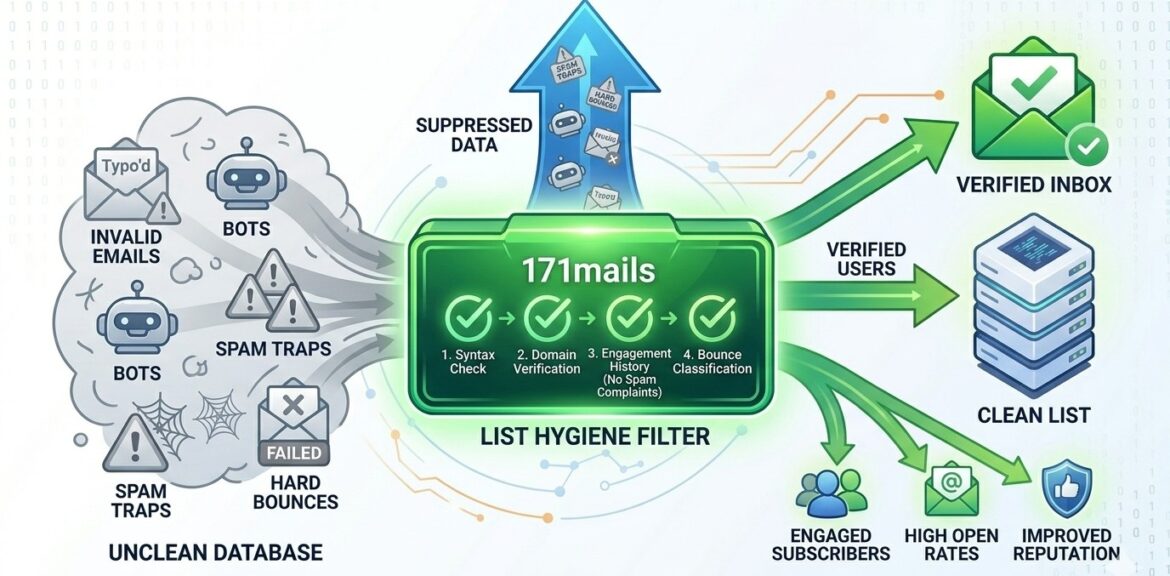

In the world of email marketing for affiliates, there is a common misconception that “more is better.” Many businesses obsess over the total number of subscribers, believing that a list of 100,000 is inherently more valuable than a list of 50,000.
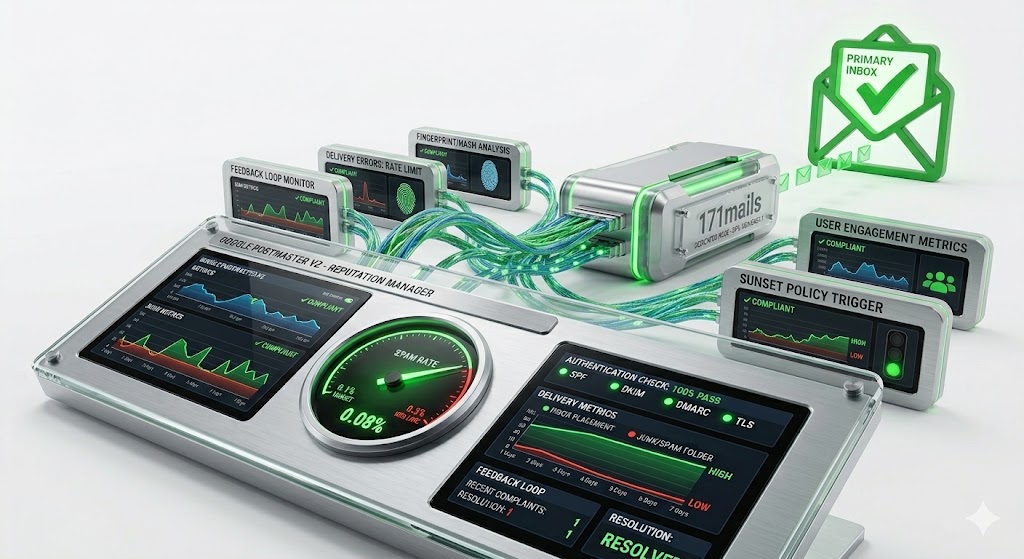
In 2026, the reality is the opposite. A large, unmanaged list full of “ghost” subscribers and abandoned accounts is a liability—not an asset. If you are pushing massive volumes through your smtp relay for marketing emails to people who aren’t opening them, you are actively signaling to Gmail and Yahoo that your content is low-value.
List hygiene is the practice of maintaining a high-quality database to ensure your sender reputation remains pristine. Here is how to clean your list for maximum engagement and ROI.
The Hidden Dangers of a “Dirty” List
When you ignore list hygiene, three things happen that can cripple your business:
-
Reputation Decay: ISPs track your “Engagement Rate” (Opens/Clicks vs. Total Sends). If 50% of your list never opens an email, your engagement rate is halved. Filters see this and start routing your mail to the “Promotions” tab or the Spam folder for everyone.
-
Increased Costs: Most SMTP services and CRMs charge based on the number of emails sent or contacts stored. You are literally paying to send messages to people who will never see them.
-
Spam Trap Risks: Abandoned email addresses are often repurposed by ISPs as “Spam Traps.” If you send an email to one, it’s an immediate signal that you are using a stale list or haven’t used a double opt-in process, leading to instant blacklisting.
Step 1: Identify and Remove “Hard Bounces” Immediately
A “Hard Bounce” occurs when an email address is permanently invalid (e.g., the domain doesn’t exist or there is a typo in the address).
-
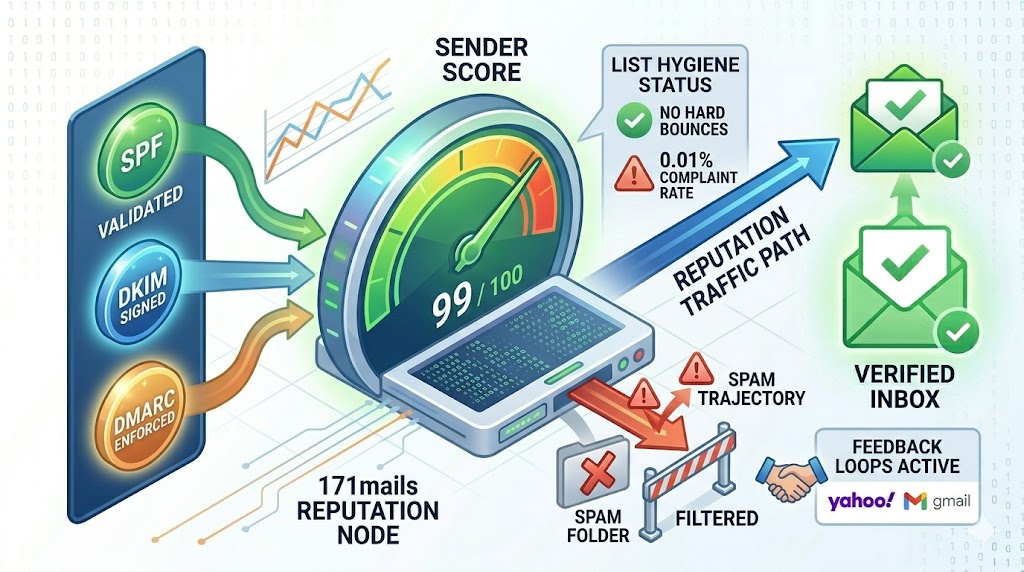
The Rule: Your smtp relay for marketing emails should be configured to automatically move hard bounces to a “Suppression List.”
-
Why: Sending to a hard bounce more than once is a major red flag for ISPs. It shows you aren’t monitoring your feedback loops.
Step 2: Implement a “Sunset Policy”
A Sunset Policy is an automated workflow that identifies subscribers who have stopped engaging and removes them.
-
The Criteria: If a subscriber hasn’t opened or clicked an email in 90 to 120 days, they enter the “Sunset Phase.”
-
The Re-engagement Attempt: Send one final, high-value offer or a “We miss you” message.
-
The Final Cut: If they don’t respond to the re-engagement attempt within 7 days, unsubscribe them. It feels painful to lose subscribers, but your “Primary Tab” placement for your active users will skyrocket as a result.
Step 3: Use a Suppression List for Global Protection
A suppression list is a “do-not-mail” database. It includes:
-
Unsubscribes.
-
Hard bounces.
-
Users who have reported your mail as spam.
-
Complainers from previous affiliate campaigns.
Professional services like 171mails manage these lists at the infrastructure level. Even if you accidentally try to upload an old list containing these addresses, our system will “suppress” the send to protect your domain reputation.
Step 4: The Power of Double Opt-In
The best way to keep a list clean is to prevent “garbage” from entering in the first place.
-
How it works: When a user signs up, they receive a confirmation email. They are only added to your marketing list after they click the link in that email.
-
The Benefit: This ensures every single person on your list is real, has a working inbox, and is actually interested in your content.
Conclusion: Quality Over Quantity
In 2026, deliverability is earned, not bought. By maintaining rigorous list hygiene and using a high-performance smtp relay for marketing emails, you ensure that your messages land in front of the people who actually want to buy from you.
Stop worrying about the number of subscribers you have and start focusing on the number of engaged subscribers you serve. Your bank account—and your sender score—will thank you.