
Email marketing terminology 2026 is the core language of high-volume infrastructure. If you don’t know the difference between an MTA and an MSA, you aren’t running a system—you’re just guessing. Stop using passive language and start speaking with authority. To master deliverability, you must first master the definitions that dictate the physics of the inbox.
The Trust Layer: Email Marketing Terminology 2026 for Authentication
These three protocols decide if you land in the Primary Tab or the trash. They are non-negotiable pillars of email marketing terminology 2026.
-
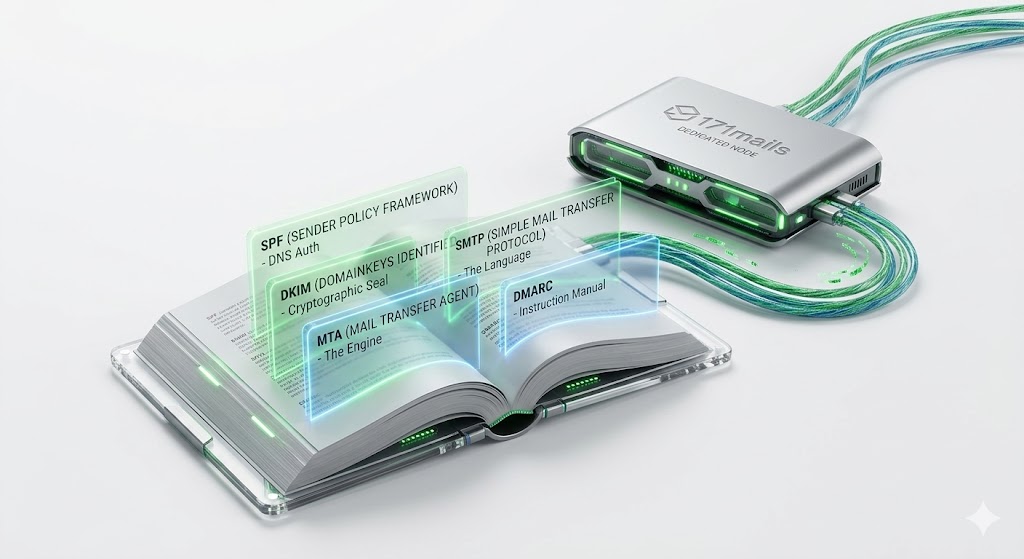
SPF (Sender Policy Framework): This DNS record acts as your “Authorized Personnel” list. It tells the world exactly which IP addresses, like your 171mails nodes, have permission to send your mail.
-
DKIM (DomainKeys Identified Mail): Think of this as a digital “wax seal.” It attaches a cryptographic signature to your email header. This proves that no one tampered with your content during transit.
-
DMARC (Domain-based Message Authentication, Reporting, and Conformance): This is the “Instruction Manual” you give to ISPs. It tells them how to handle emails that fail SPF or DKIM. Use “p=reject” to kill unauthorized mail immediately.
The Engine Room: Infrastructure Terminology
This is the hardware and software that powers your operation. Understanding these email marketing terminology 2026 terms ensures you choose the right tools for the job.
-
MTA (Mail Transfer Agent): This software (like KumoMTA or PowerMTA) physically moves the email from your server to the recipient.
-
MUA (Mail User Agent): This is the app your human audience uses to read your message, such as Gmail, Outlook, or Apple Mail.
-
SMTP (Simple Mail Transfer Protocol): Servers use this universal language to talk to each other and move mail across the internet.
-
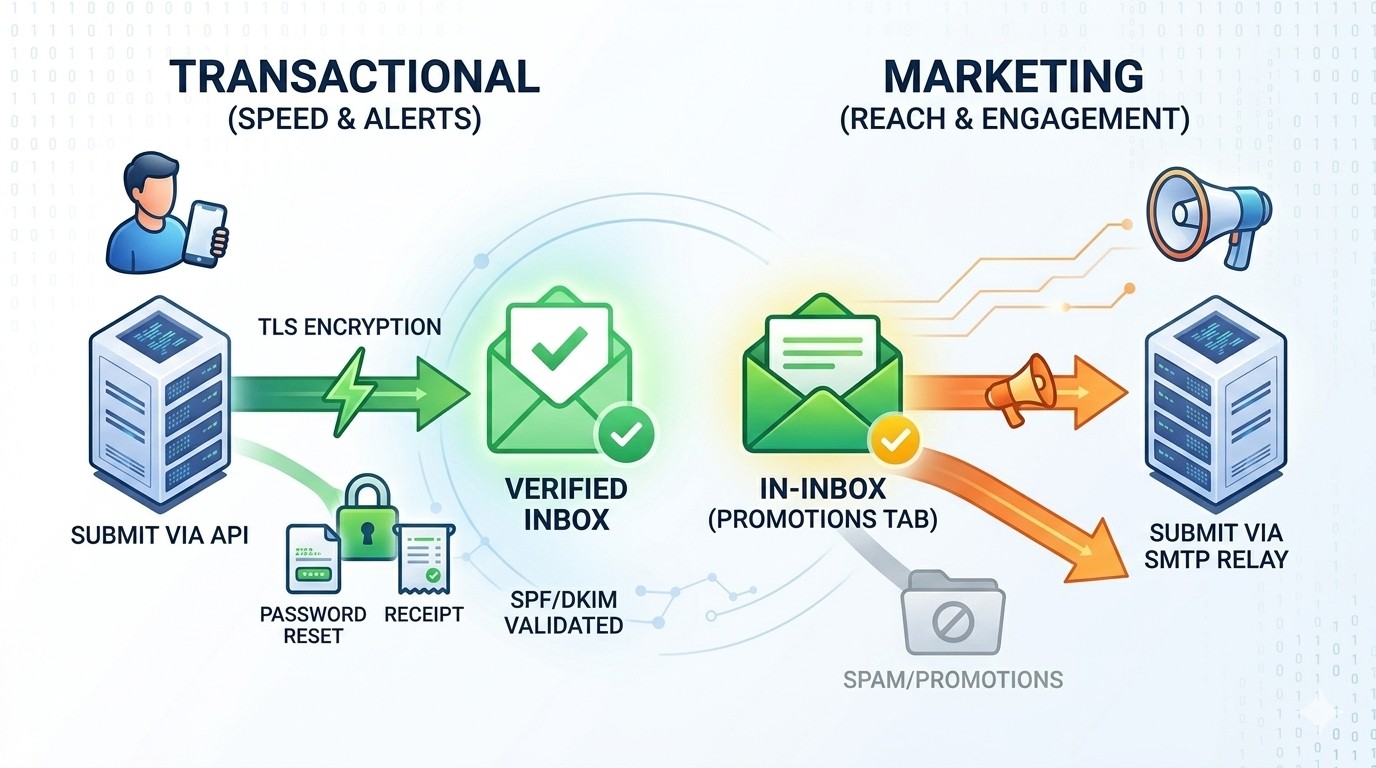
API (Application Programming Interface): Use this modern method to trigger emails via code. It bypasses the slow SMTP “handshake” to give you faster speed-to-lead.
-
rDNS (Reverse DNS) / PTR (Pointer Record): This maps your IP address back to your domain. If you lack a valid PTR, filters will treat you as invisible.
The Credit Score: Reputation & Delivery Definitions
These metrics tell you how the world perceives your brand. Tracking these email marketing terminology 2026 signals is vital for long-term sender health.
The Profit Layer: Content & Engagement Language
This is where you turn raw data into actual revenue. Email marketing terminology 2026 also covers how you optimize your creative for maximum ROI.
-
CTR (Click-Through Rate): The percentage of people who clicked a link out of the total emails you delivered.
-
CTOR (Click-To-Open Rate): The percentage of people who clicked a link out of those who actually opened the email. This measures your content quality.
-
LPO (Landing Page Optimization): The process of ensuring your destination page actually converts the user after the click.
-
Hash-Busting: You inject randomized, invisible code into your HTML to bypass AI-driven content filters, a key strategy in email marketing terminology 2026.
Quick Summary
Essential email marketing terms for 2026 include authentication (SPF, DKIM, DMARC), infrastructure agents (MTA, MUA, SMTP), and reputation metrics (FBL, GPT). Professionals use these tools to manage high-volume delivery on platforms like 171mails.