
In my 20 years of managing email infrastructure, I’ve seen thousands of marketers make the same mistake: they think deliverability is a technical “setting” they can turn on.
It isn’t.
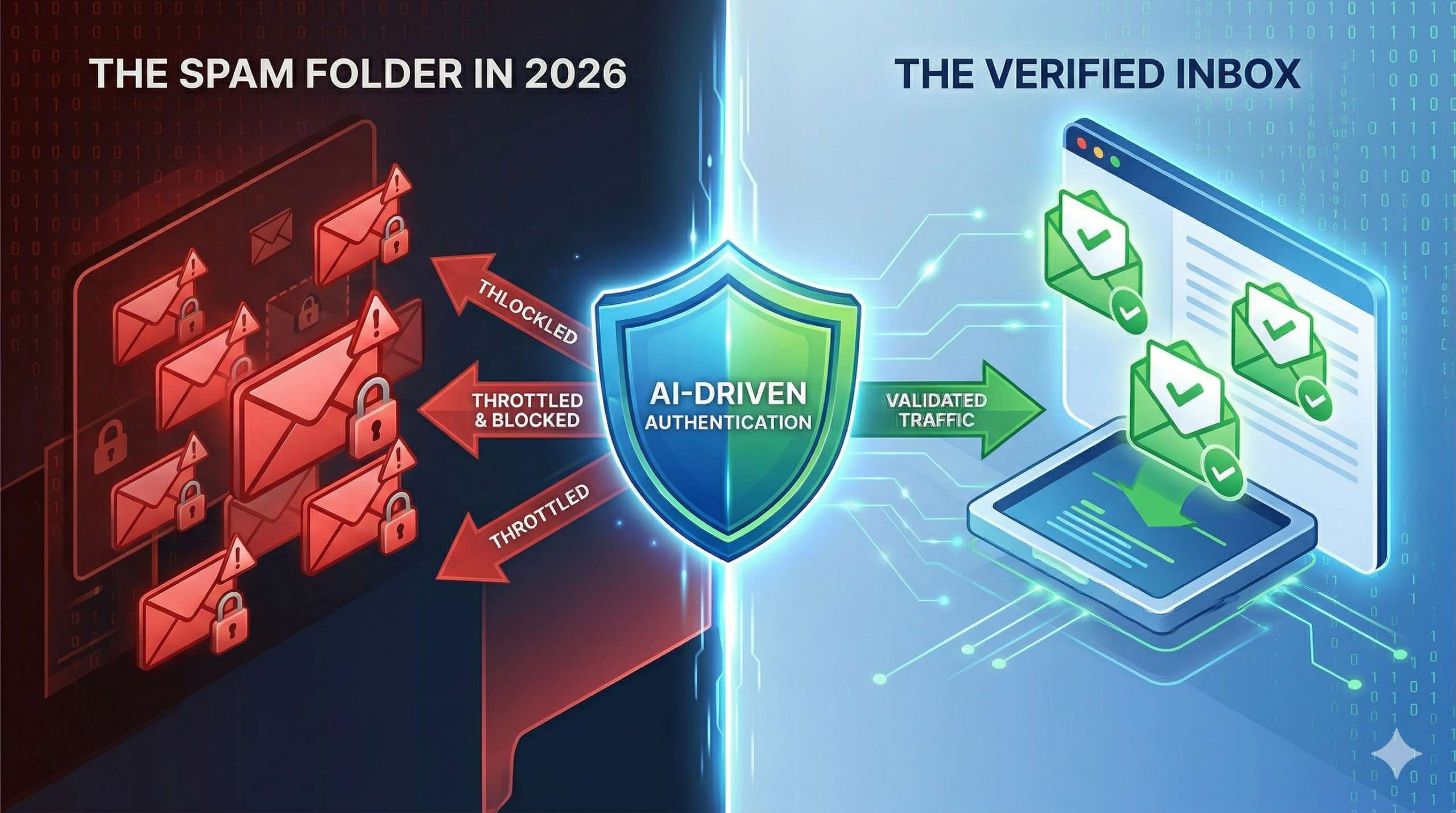
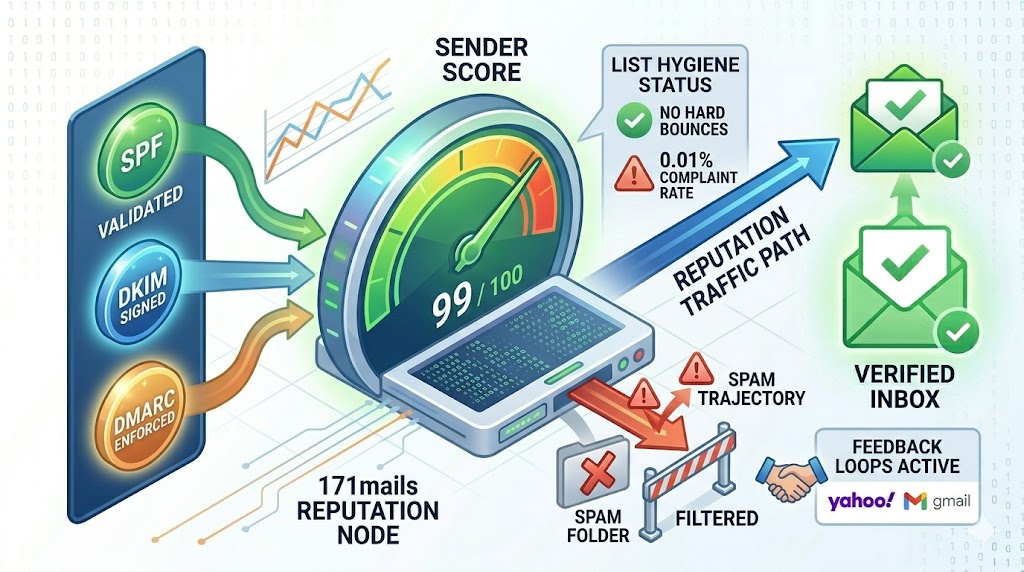
Deliverability is a reputation. Think of it like a credit score for your brand. If you pay your bills on time (send good content to people who want it), your score goes up, and the “bank” (Gmail or Yahoo) gives you a big loan (access to the Inbox). If you miss payments (get spam complaints), your score tanks, and you’re forced to deal with high-interest “debt” (the Spam Folder).
If you want to win the reputation game in 2026, you need to understand how the “Big Three” ISPs judge you. Here is the blueprint for building and protecting your sender reputation on 171mails.
1. The Three Layers of Your “Sender Identity”
ISPs don’t just look at your name. They look at three specific identifiers to decide if you are a friend or a foe.
-
IP Reputation: This is the physical address of the server sending the mail. If you use a Dedicated IP from 171mails, you own this score entirely. If you use a shared IP, you are at the mercy of every other person using that same server.
-
Domain Reputation: This is your brand’s “face.” Even if you move to a new server, your domain reputation follows you. Gmail, in particular, cares more about your domain than your IP.
-
Content Reputation: AI filters now scan your links, your images, and your “tone.” If you use “spammy” words or broken links, you’ll trigger an alarm.
2. The “Engagement” Signal: The Only Metric That Truly Matters
In 2026, “List Size” is a vanity metric. “Engagement” is a survival metric.
ISPs watch how users interact with your mail. Every time a user opens your email, clicks a link, or—the holy grail—moves your email from “Promotions” to “Primary,” your reputation increases.
Conversely, if a user deletes your email without opening it, or worse, clicks “Report Spam,” your reputation takes a massive hit.
The Veteran’s Secret: To stay in the inbox, you must Sunset your inactive users. If someone hasn’t opened an email in 90 days, stop mailing them. Sending mail to “ghost” subscribers tells Gmail that your content is boring, and they will start burying your mail for everyone, including your active fans.
3. Technical Authenticity: The “Digital Handshake”
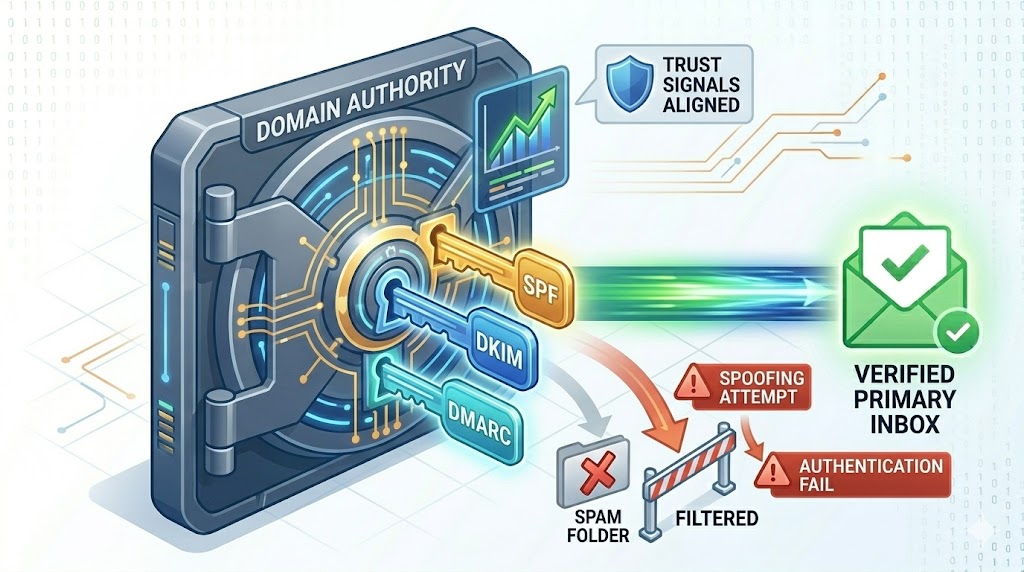
Before an ISP even looks at your content, they perform a technical background check. If you haven’t set up your “Digital Handshake,” you’re going to the spam folder.
-
SPF (Sender Policy Framework): A list of “authorized” servers allowed to send mail for your domain.
-
DKIM (DomainKeys Identified Mail): A digital signature that proves the email wasn’t tampered with during its journey.
-
DMARC: The “instruction manual” that tells the ISP what to do if SPF or DKIM fails. Setting this to
p=rejectis the ultimate signal of a professional sender.
At 171mails, we help you align all three. This alignment creates a “Verified” status that AI filters love.
4. Feedback Loops (FBL): Listening to the “Boos”
Imagine performing on a stage. If the audience starts booing, you want to know immediately so you can change your act.
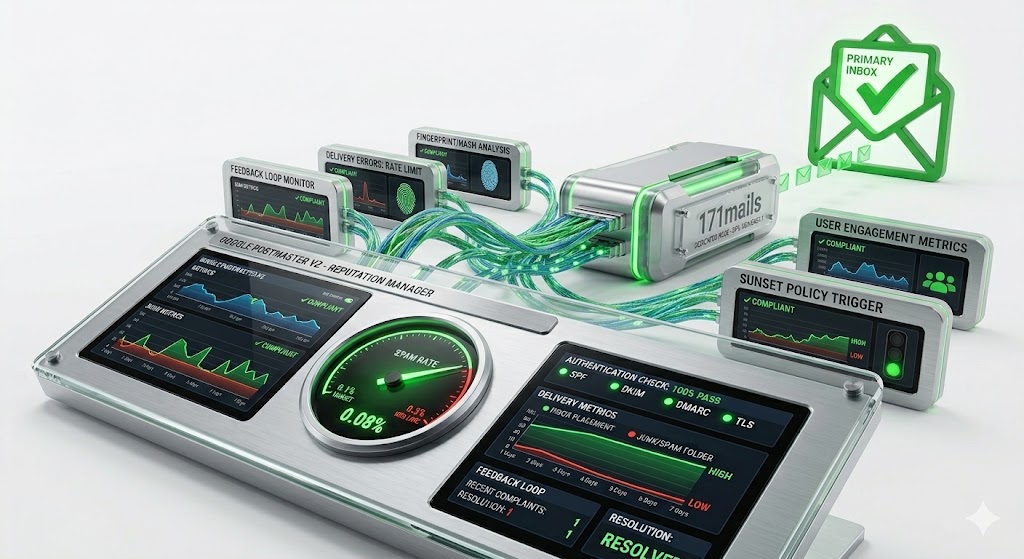
A Feedback Loop is exactly that. When a user clicks “Spam” in Yahoo or Outlook, the ISP sends a report back to us. 171mails then automatically removes that person from your list.
If you ignore these “boos” and keep mailing those people, the ISPs will “kick you off the stage” (block your IP). We manage these loops for you in real-time to keep your reputation pristine.
5. Managing Bounces: The “Hard” vs. “Soft” Reality
Bounces are the “Check Engine” light of email marketing.
-
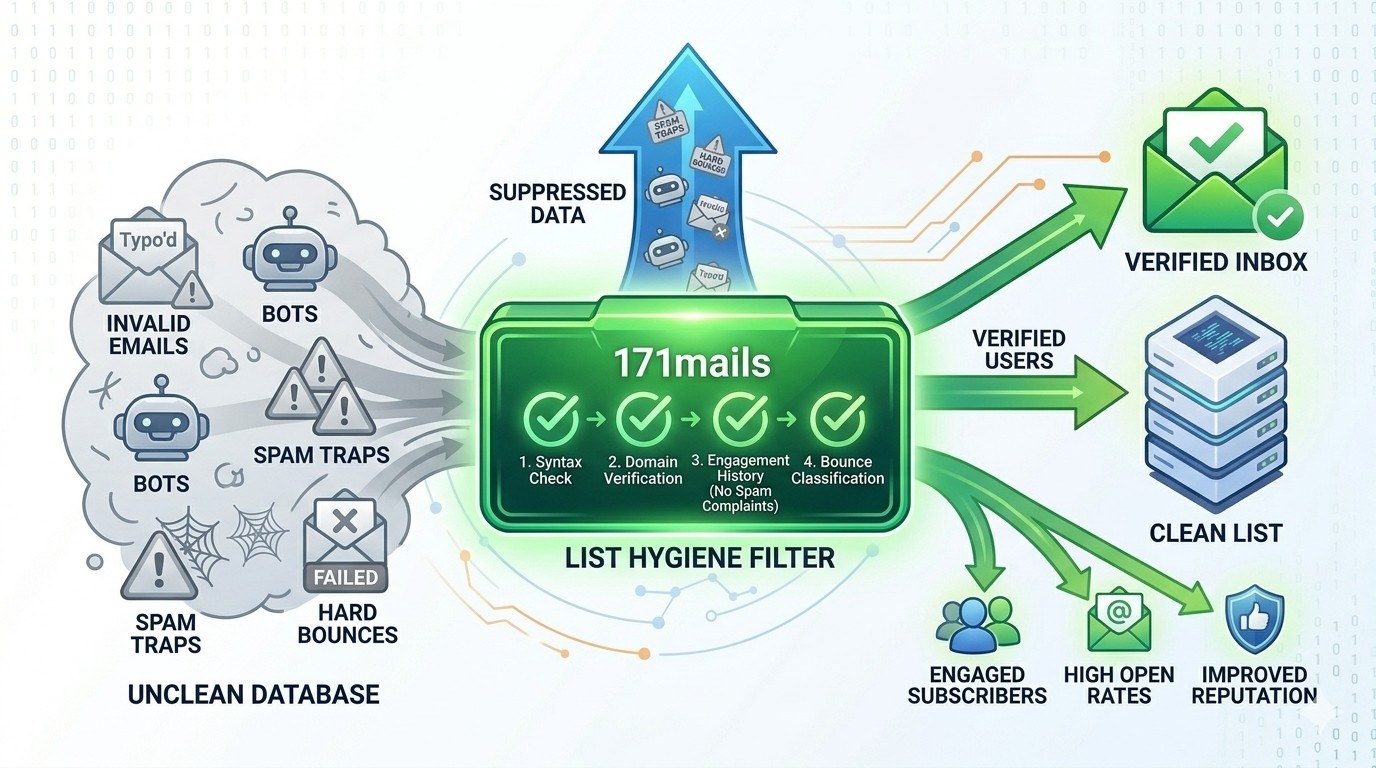
Hard Bounce: The email address doesn’t exist. Delete it immediately.
-
Soft Bounce: The inbox is full or the server is temporarily down. Try again later, but don’t try forever.
A high bounce rate (anything over 2%) tells ISPs that you are using an old, “dirty” list or—worse—a purchased list. Clean lists lead to high reputations.
Summary: Your Reputation is Your Revenue
You can have the best product in the world, but if your email lands in the spam folder, nobody knows it exists. By focusing on technical alignment, list hygiene, and user engagement, you turn your email infrastructure into a high-trust asset.
On 171mails, we provide the dedicated tools and the expert oversight to ensure your reputation remains spotless, so your revenue stays consistent.